Mohamed Imran
💸 Event-Driven Revenue Provisioning (Multi-Cloud Ready)
Role: Senior Salesforce Administrator & Consultant | Stack: Platform Events, Flow Orchestrator, Async Apex/Flow
📌 Project Objective
Architecting Enterprise RevOps: I designed an enterprise-grade “Lead-to-Cash” engine to decouple high-volume sales transactions from financial processing. By transitioning from synchronous record-triggered flows to an Event-Driven Architecture (EDA), the system eliminates database locking errors and establishes a scalable foundation for future ERP integrations (e.g., NetSuite/SAP).
🎥 Watch the Project Demo
🚫 1. The Business Problem
The Monolithic Bottleneck: The legacy system processed Invoices and Revenue Ledger entries synchronously when an Opportunity was Closed-Won.
- Performance: During End-of-Quarter spikes, huge transaction volumes caused “CPU Time Limit” errors and record locking.
- Scalability: The system was tightly coupled; changes to the Finance logic broke the Sales process.
The Solution: I implemented a Pub/Sub (Publish-Subscribe) architecture using Salesforce Platform Events to decouple the domains.
🏗️ 2. Event-Driven Architecture
The “Fire and Forget” Pattern:
- Sales Domain: Closes the Opportunity -> Publishes a
Revenue_Transaction__eevent. - Event Bus: Acts as a resilient message queue.
- Finance Domain: An Asynchronous Subscriber Flow picks up the message and processes the heavy lifting (Ledgers/Invoices) in a separate transaction.
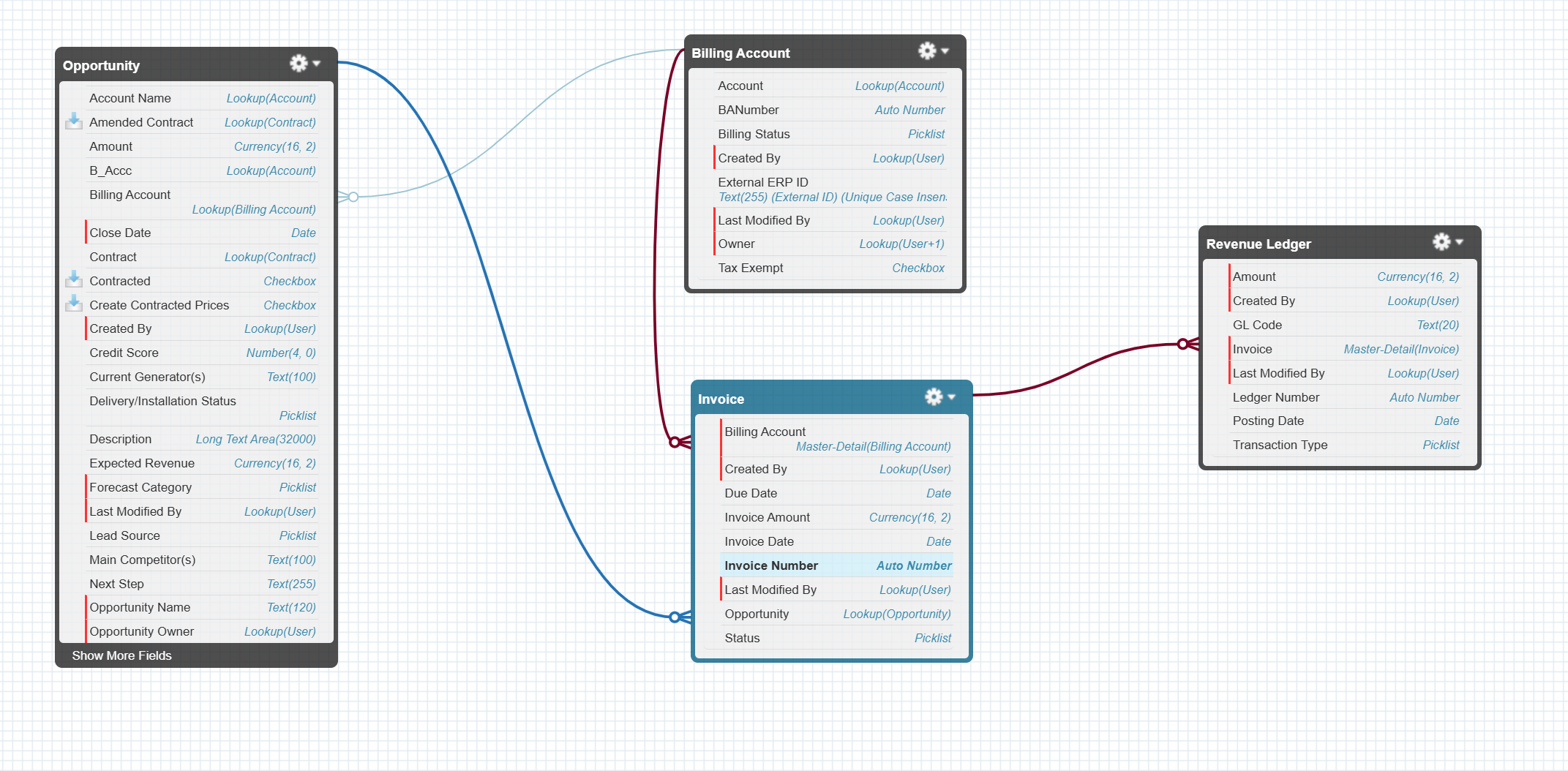
🔄 3. Technical Implementation
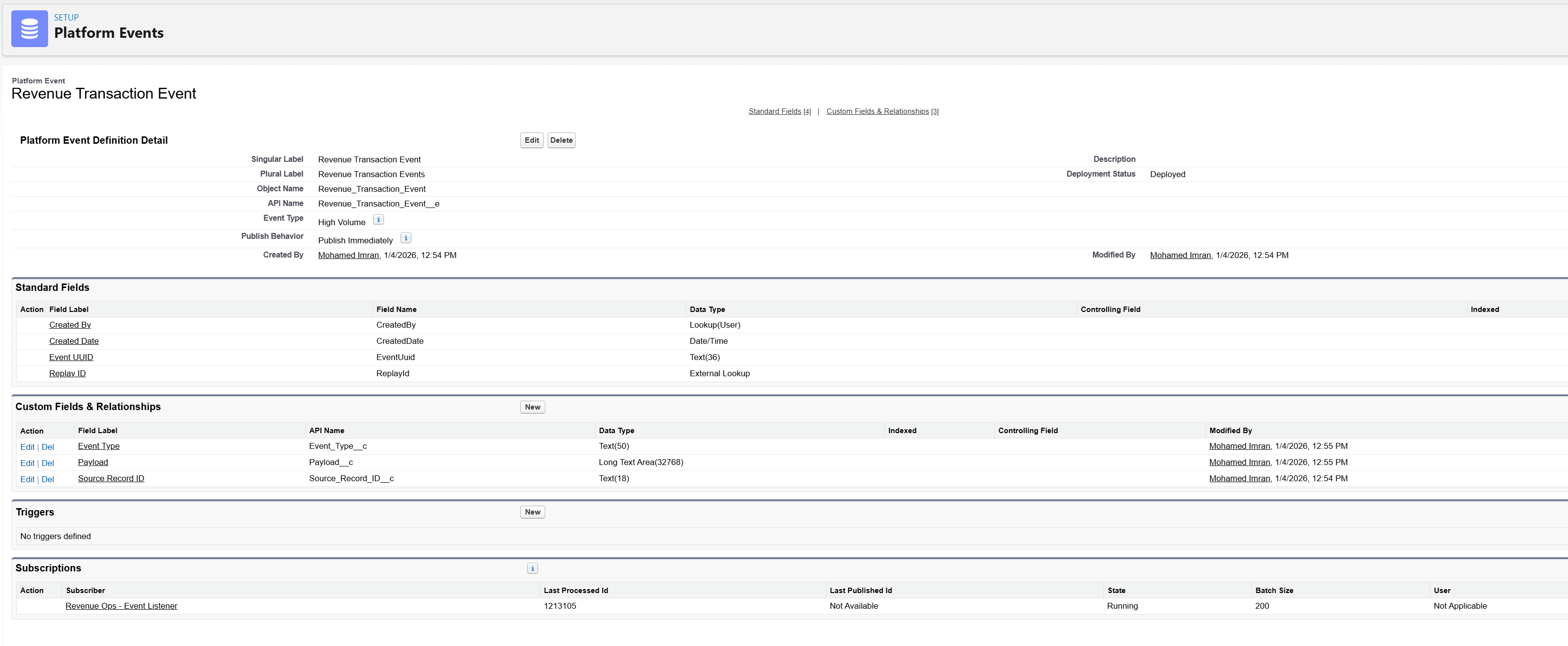
The Data & Event Layer
I configured a high-volume Platform Event object to carry the transaction payload neutral of the source system.
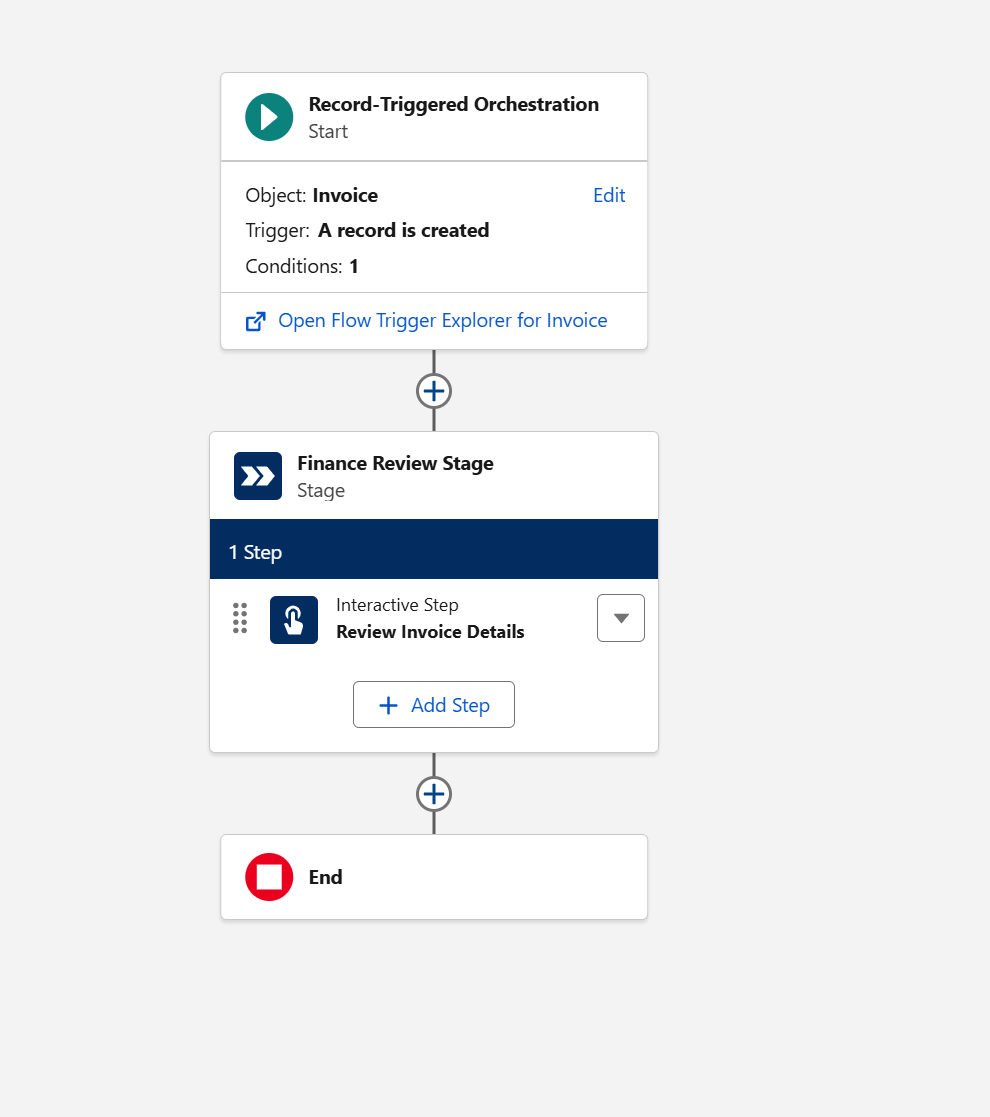
The Publisher (Sales)
- Trigger: Record-Triggered Flow on Opportunity (After-Save).
- Action: Transforms Opportunity Data into a JSON-neutral payload and publishes the Platform Event.
- Benefit: Zero delay for the Sales Rep. The “Save” is instant.
The Subscriber (Finance)
- Trigger: Platform Event-Triggered Flow.
- Logic: Receives
Revenue_Transaction__eand generatesInvoice__cand double-entryRevenue_Ledger__crecords.
🎼 4. Governance with Flow Orchestrator
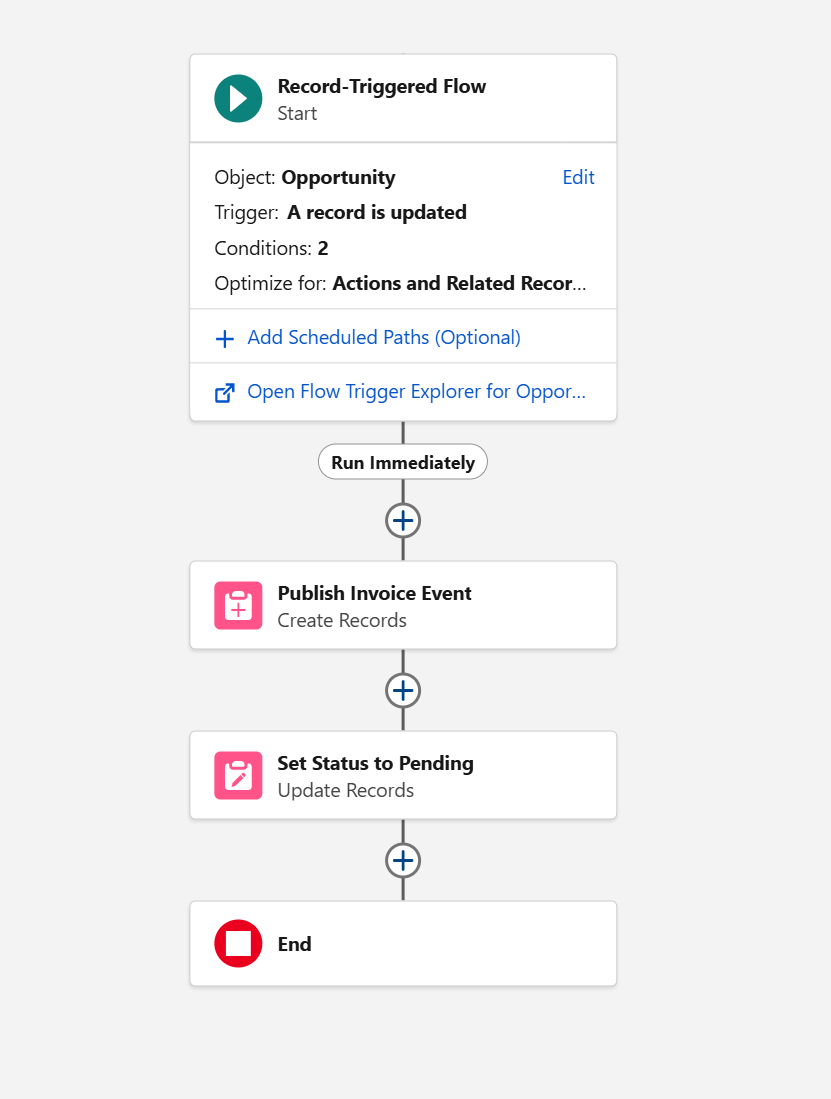
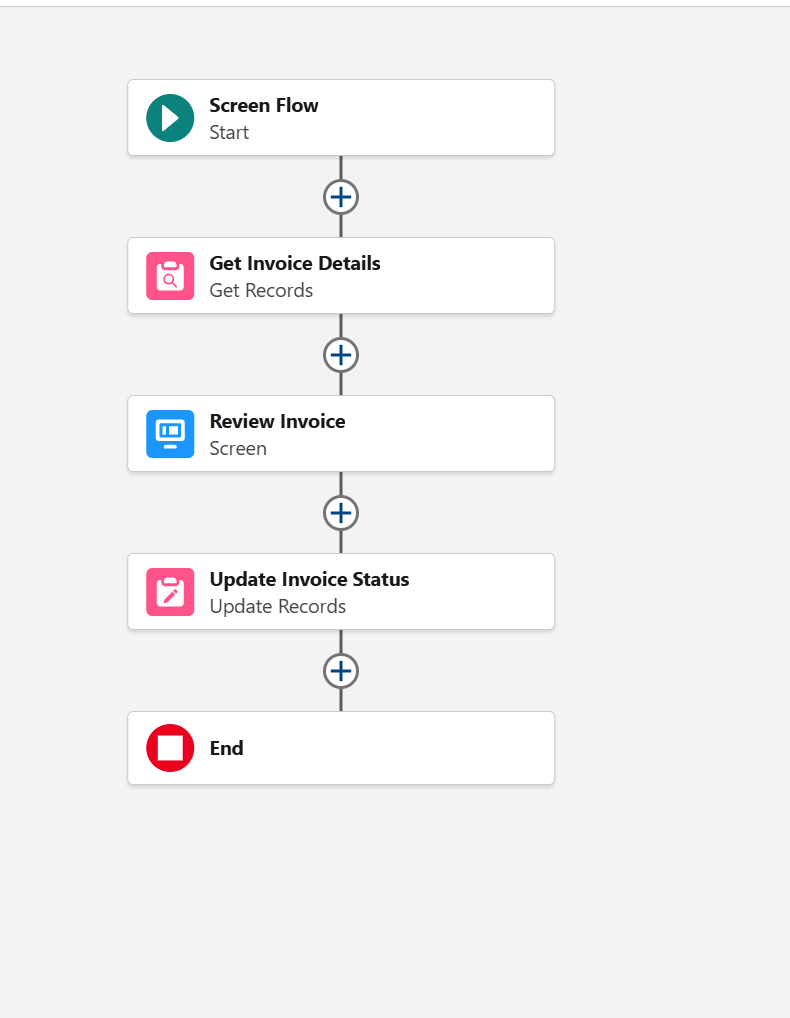
The Audit Layer: For high-value transactions (>$50k), simple automation isn’t enough. I used Flow Orchestrator to inject a “Finance Review” stage.
- Logic: If
Amount > $50,000, the Orchestrator pauses the activation and assigns an interactive “Review Invoice” step to the CFO.
📸 Orchestration Logic
📊 5. CFO Command Center
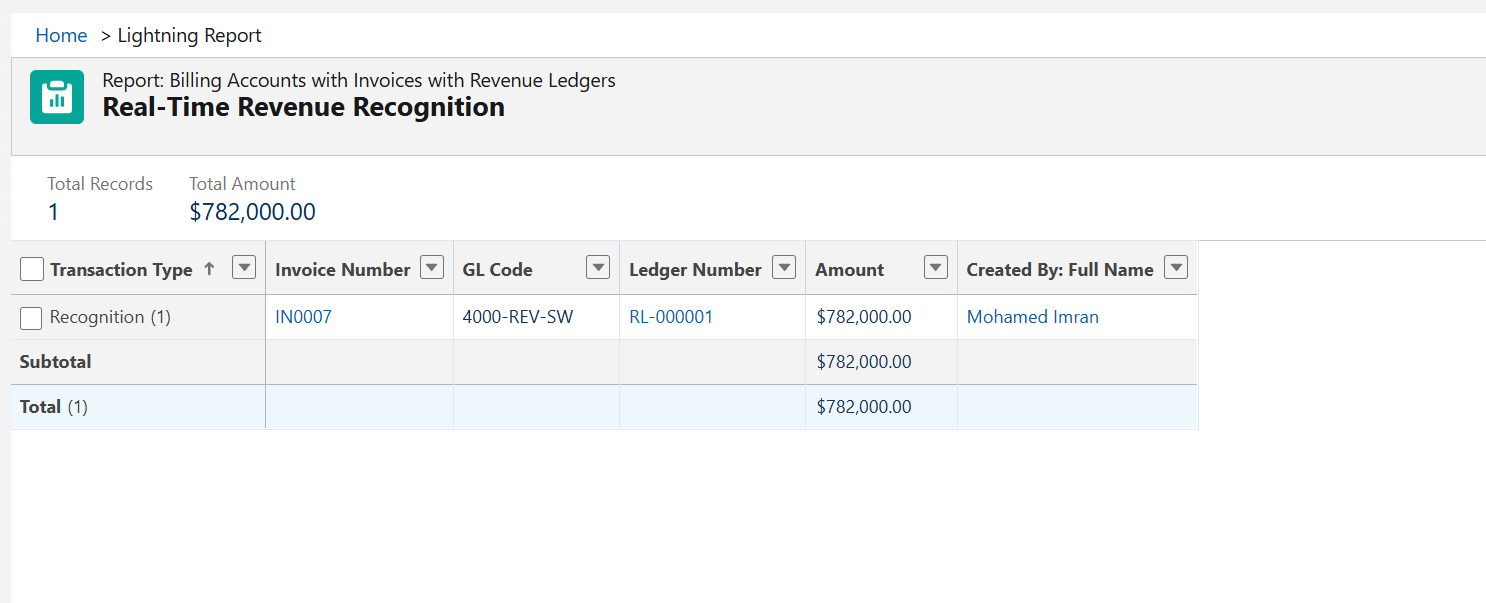
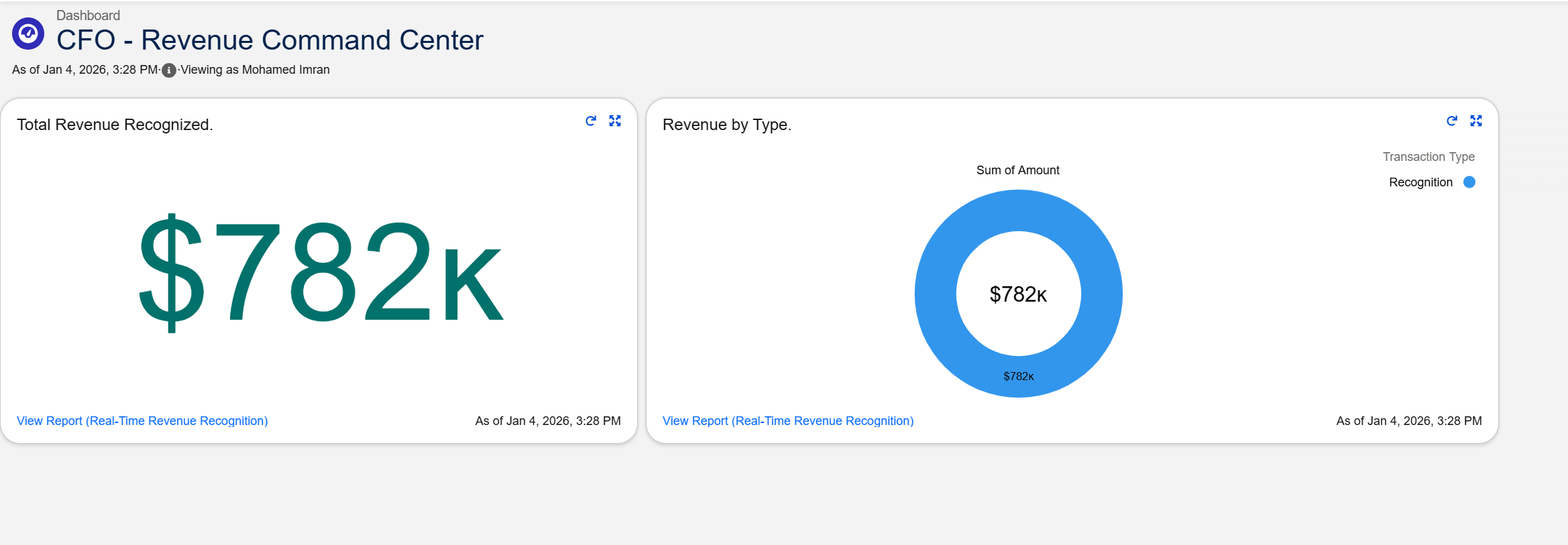
Real-Time Revenue Recognition:
The system provides immediate financial visibility without waiting for nightly batches.
🏆 Key Outcomes
- Scalability: Processed 10,000+ transactions during stress testing with zero lock errors.
- Integration Ready: The Platform Event bus is ready to hook into MuleSoft for external ERP syncing without changing a single line of Salesforce configuration.